
Nutrient guide
Zinc (Zn)
A trace element needed in small amounts, but commonly short on alkaline and calcareous Australian soils.
What zinc does
Zinc is involved in enzymes and growth hormones. It affects early growth, internode length and, in cereals, tillering and grain set.
Where it is often short
Zinc deficiency is common on alkaline and calcareous soils and on some sands. At high pH, zinc forms compounds of low solubility. It can also show up in cold, wet early seasons, when root activity is low, and where soil phosphorus is very high.
Signs of deficiency
In cereals, middle leaves develop pale stripes or blotches and dead patches, and plants are stunted. In pulses, leaves can be small, pale or bronzed. Symptoms can look like other problems.
Ways to supply zinc
- Zinc included in, or coated on, the seeding fertiliser, for a soil reserve close to the roots.
- Zinc sulphate applied to soil, or dissolved for liquid and foliar use.
- Seed treatments for early supply.
- Foliar sprays to correct a deficiency in-crop.
Crop guides
What zinc deficiency looks like
Photos of deficiency symptoms. Where we do not yet have a suitable photo, we will add our own trial photo. Symptoms vary with crop, variety, soil and season.
-
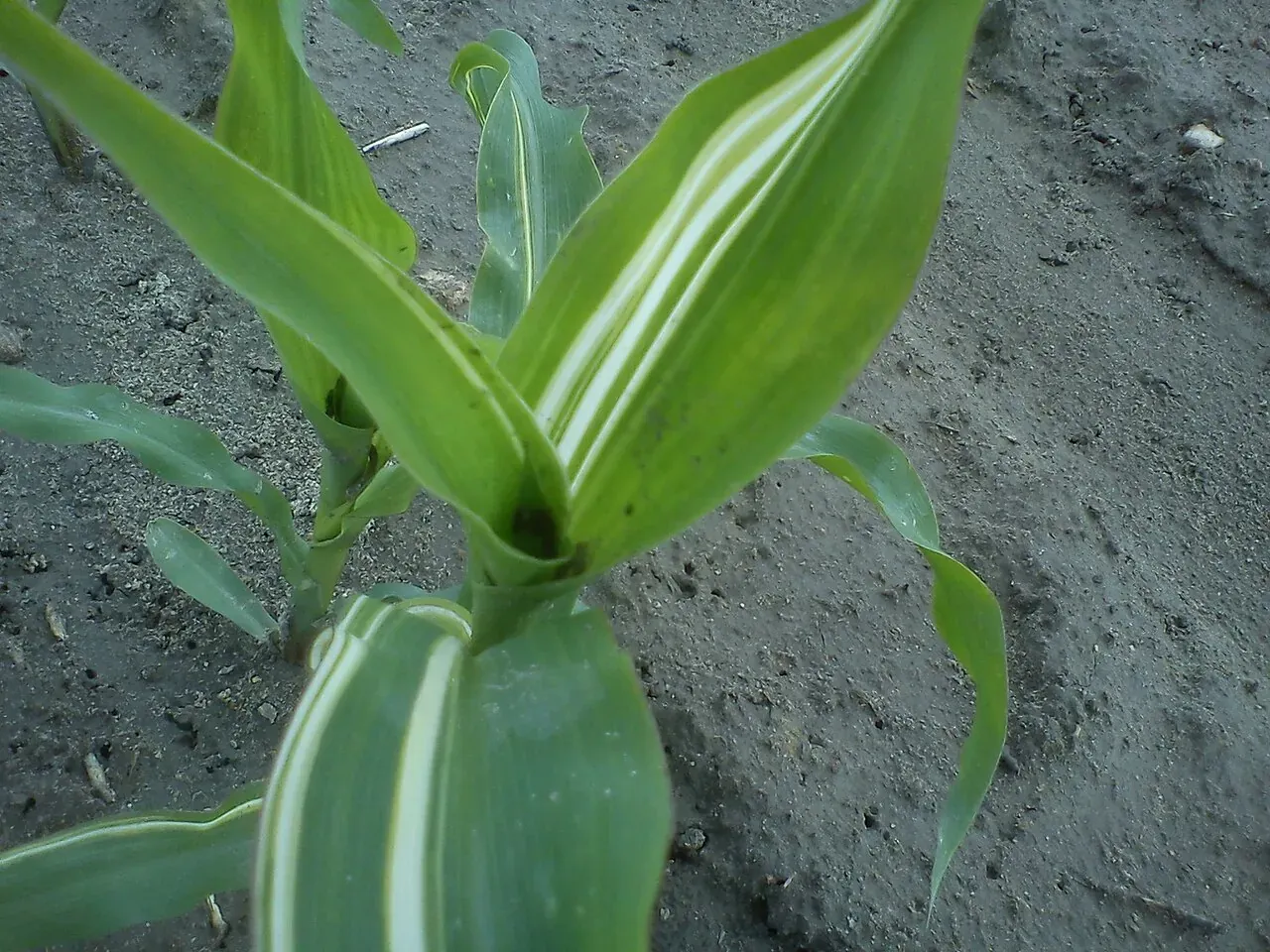
Zinc deficiency in maize: broad pale stripes on the leaves of young plants. Photo: Agronom, CC BY-SA 3.0, via Wikimedia Commons. -
Photo coming soon: LCF trial photo
Zinc deficiency in wheat. We will add our own trial photo here.
Photos may show other crops with the same symptom. Full credits: Image credits.
How LCF products fit
LCF Australia supplies compound fertilisers made by our manufacturing partner Lardmee (LDM), including Urea Plus and zinc and manganese sulphates, on enquiry. We also supply the Field Spears soil testing kit, which reads soil N, P, K and pH in the paddock. Which product suits, how much and when depends on the soil, the crop, the season and how you apply it.
-
Micronutrients and sulphates
Zinc sulphate, manganese sulphate and other nutrients for growers and liquid-fertiliser manufacturers. Supplied on enquiry.
View Micronutrients and sulphates -
Humate compound fertilisers
Our manufacturing partner Lardmee (LDM), an independent company in China, makes compound fertilisers that include potassium humate. Ask us about products and availability.
View Humate compound fertilisers