
Nutrient guide
Nitrogen (N)
The nutrient behind most of the yield and protein response in Australian grain crops, and the one most easily lost.
What nitrogen does
Nitrogen is part of every protein and of chlorophyll, the green pigment plants use to capture light. It drives leaf and tiller growth, canopy size and, in cereals, grain protein.
Signs of deficiency
Nitrogen moves within the plant, so shortages show first in the older, lower leaves. They turn pale and yellow while newer growth stays greener. Crops are thin, with fewer tillers or branches.
Fertiliser forms
- Urea: the most concentrated common solid nitrogen fertiliser.
- Ammonium forms, such as ammonium sulphate, which also supply sulphur.
- Compound fertilisers that combine nitrogen with phosphorus, potassium, sulphur or other nutrients in each granule.
- Liquid nitrogen products such as UAN.
How nitrogen is lost
- Volatilisation: urea on the soil surface can lose nitrogen to the air as ammonia, especially on warm, moist soil with no follow-up rain, and on alkaline soils.
- Leaching: nitrate moves down with water, below the root zone, on sandy soils and in wet periods.
- Denitrification: in waterlogged soils, nitrate is converted to gases and lost.
- Immobilisation: soil microbes breaking down stubble can temporarily tie up nitrogen.
Why nitrogen goes unused
- Sulphur shortage: plants need sulphur to turn nitrogen into protein, so a crop short of sulphur uses nitrogen less fully.
- Seed-row effects: urea dissolving next to the seed releases ammonia, which can damage germinating seed and thin the stand.
- Late uptake: nitrogen taken up late in cereals goes mostly into grain protein rather than yield.
Crop guides
What nitrogen deficiency looks like
Photos of deficiency symptoms. Where we do not yet have a suitable photo, we will add our own trial photo. Symptoms vary with crop, variety, soil and season.
-
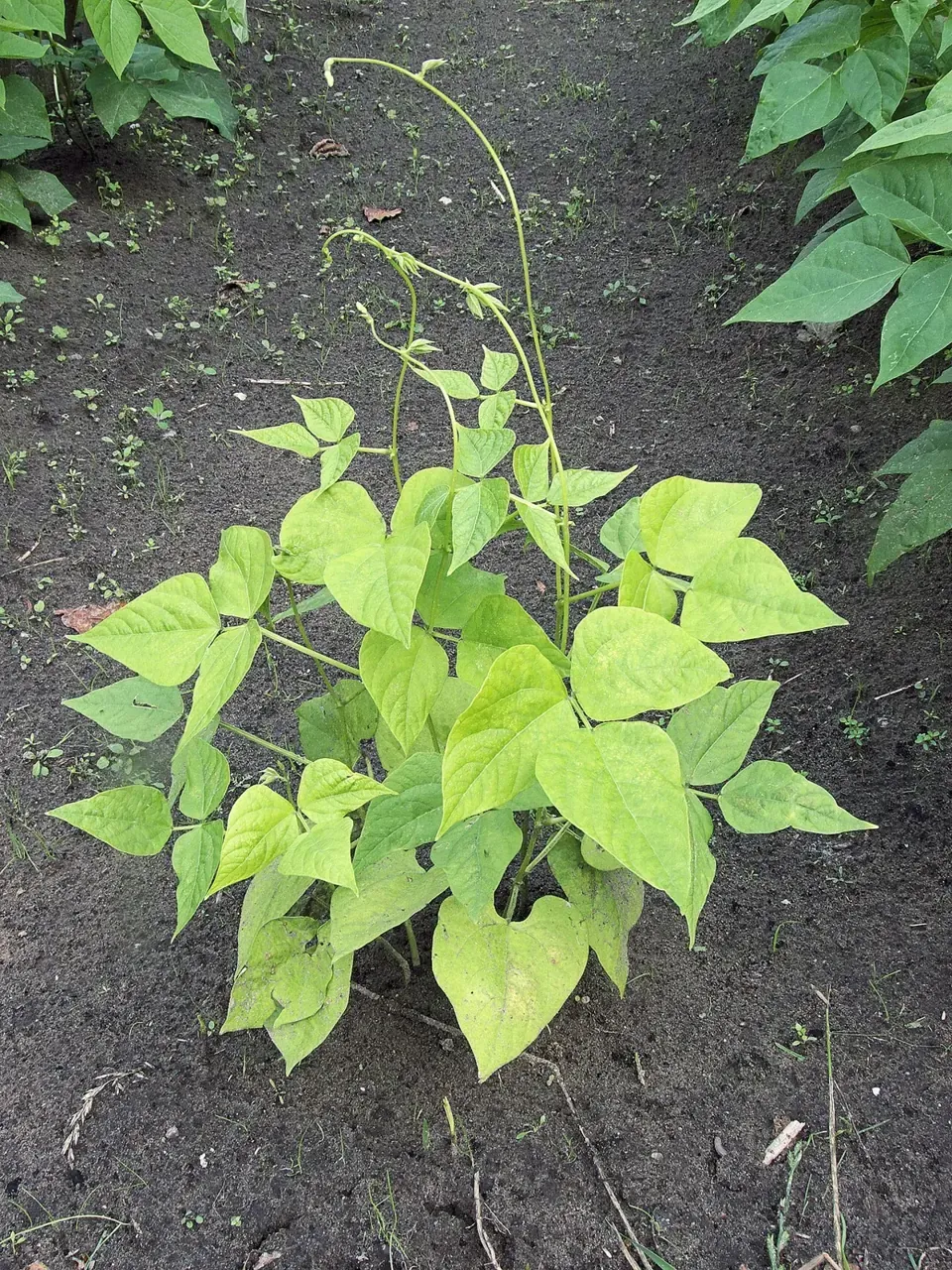
Nitrogen deficiency in a bean plant (Phaseolus vulgaris): the whole plant is pale and yellow-green, with older leaves affected first. Photo: Rasbak, CC BY-SA 3.0, via Wikimedia Commons. -
Photo coming soon: LCF trial photo
Nitrogen deficiency in a cereal crop. We will add our own trial photo here.
Photos may show other crops with the same symptom. Full credits: Image credits.
How LCF products fit
LCF Australia supplies compound fertilisers made by our manufacturing partner Lardmee (LDM), including Urea Plus and zinc and manganese sulphates, on enquiry. We also supply the Field Spears soil testing kit, which reads soil N, P, K and pH in the paddock. Which product suits, how much and when depends on the soil, the crop, the season and how you apply it.
-
Urea Plus
A compounded nitrogen fertiliser, 36N-0P-0K with 7.5% sulphur, 1% magnesium and trace zinc and boron. Supplies nitrogen and sulphur together.
View Urea Plus -
Humate compound fertilisers
Our manufacturing partner Lardmee (LDM), an independent company in China, makes compound fertilisers that include potassium humate. Ask us about products and availability.
View Humate compound fertilisers -
Other fertilisers by enquiry
Granular urea and other fertilisers. Name the product and the quantity and we will tell you what we can supply.
View Other fertilisers by enquiry