
Crop guide
Wheat nutrition
Nutrient needs, key growth stages, common deficiencies and why nutrients go missing in Australian wheat.
Nutrient needs
Nitrogen drives most of the yield and grain-protein response in wheat. How much a crop needs depends on the yield the season can support, the nitrogen already in the soil and the protein grade you are aiming for.
Phosphorus matters most early, for root growth and tillering, and because it barely moves in soil it is usually placed close to the seed at sowing. Sulphur supports nitrogen use and protein. Potassium can limit yield on light, sandy soils and in higher-rainfall areas. Zinc, manganese and copper are the micronutrients most often short, depending on soil type.
How much of each nutrient the crop can reach depends on soil type, pH, moisture and what earlier crops left behind.
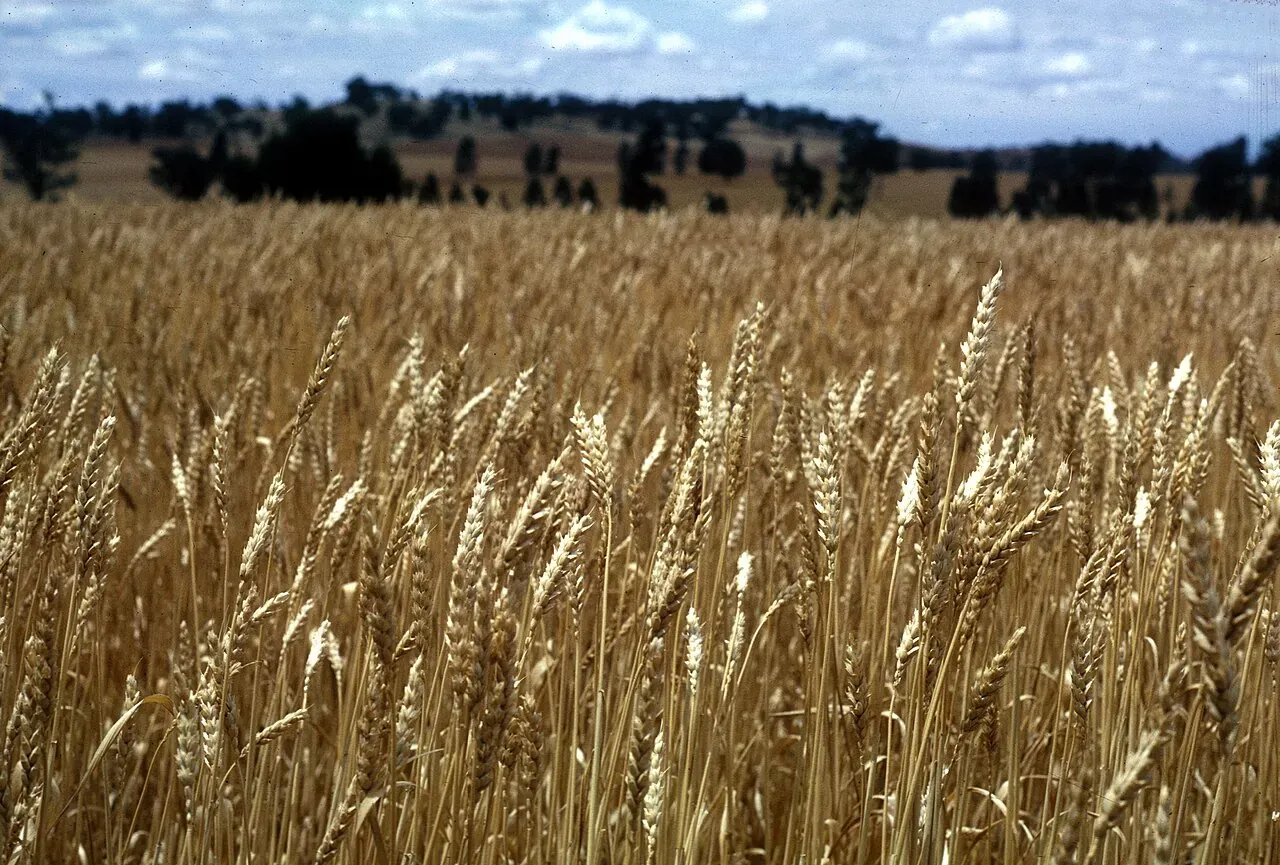
Growth stages and when nutrients matter
-
Stage 1
Sowing and establishment
Phosphorus and any starter nitrogen go in at sowing. Phosphorus is most valuable close to the seed, where young roots can reach it. Zinc is often supplied with the seeding fertiliser on soils prone to deficiency.
-
Stage 2
Tillering (Zadoks 20s)
Nitrogen supply influences how many tillers form and survive. A crop that runs short here has fewer heads to fill later.
-
Stage 3
Stem elongation (from about Z30)
Nitrogen demand rises quickly. Nitrogen taken up from here onwards mainly supports yield.
-
Stage 4
Flag leaf to booting (about Z37 to Z45)
Later nitrogen tends to lift grain protein more than yield, if there is enough soil moisture or rain to take it up.
-
Stage 5
Flowering and grain fill
The crop moves stored nitrogen into the grain. A healthy green canopy through grain fill supports grain size.
Common deficiencies and signs
Symptoms of different problems can look alike. Disease, herbicide damage, waterlogging and frost can all produce signs similar to a deficiency.
| Nutrient | What to look for | Where it is more likely |
|---|---|---|
| Nitrogen | Pale, yellowing older leaves, thin crops and fewer tillers. | Most soils, especially after cereals, in wet seasons or on low organic-matter soils. |
| Phosphorus | Stunted plants, poor tillering, dark or purplish older leaves and slow development. | Low-phosphorus soils and soils that tie up phosphorus, such as calcareous and high-PBI soils. |
| Sulphur | Yellowing that starts in the younger leaves, often across the whole plant. | Sandy, low organic-matter soils and after high rainfall. |
| Potassium | Yellowing and browning of older leaf tips and margins. | Light sandy soils, higher-rainfall areas and paddocks with a history of hay cutting. |
| Zinc | Pale stripes or blotches and dead patches on middle leaves, with stunted plants. | Alkaline and calcareous soils, some sands, and cold, wet early seasons. |
| Manganese | Pale, limp leaves with interveinal yellowing and grey or brown spots. | Calcareous and alkaline sands, loose or fluffy seedbeds and dry conditions. |
What deficiencies look like in wheat
Photos of deficiency symptoms. Where we do not yet have a suitable photo, we will add our own trial photo. Symptoms vary with crop, variety, soil and season.
-
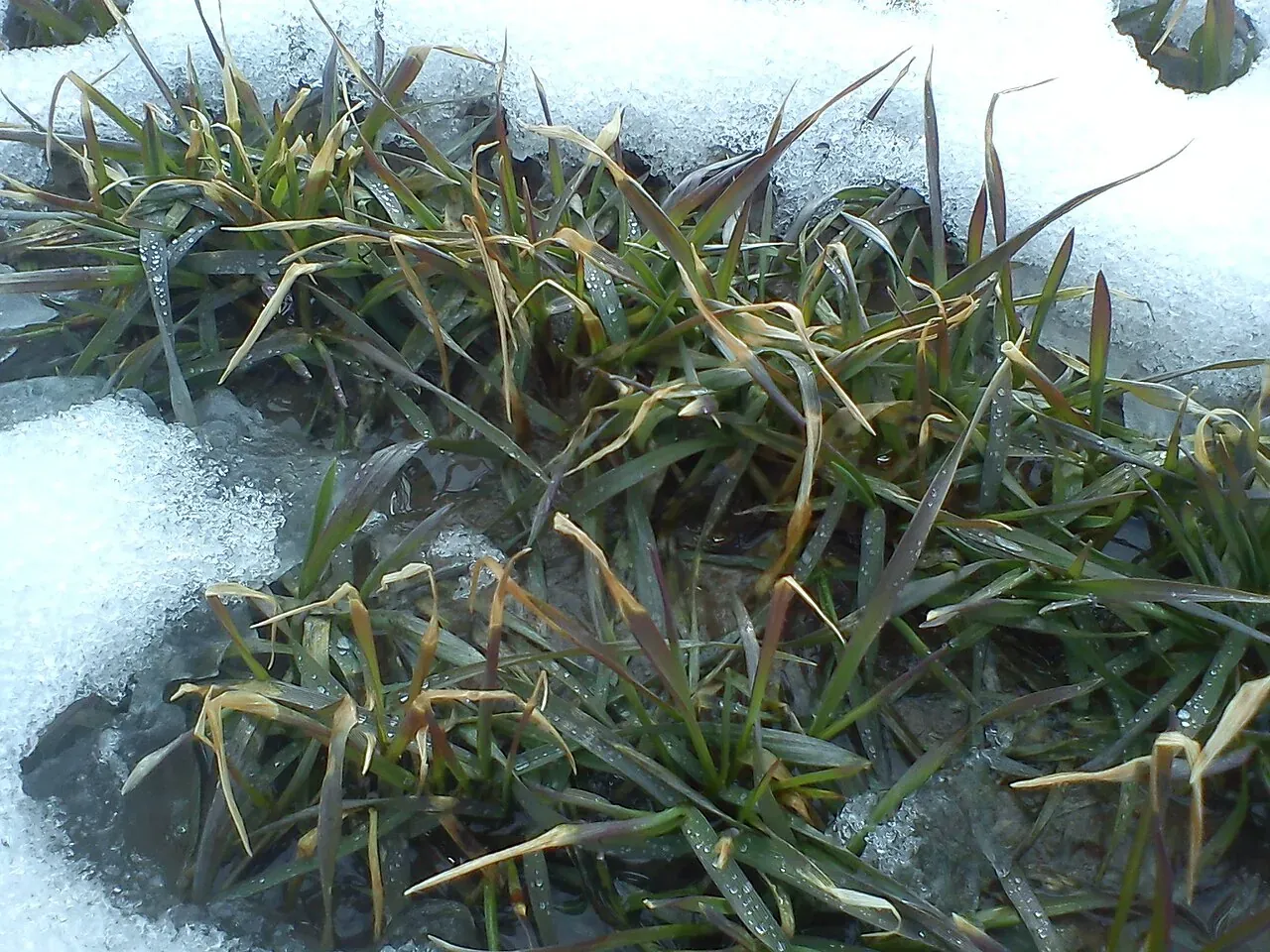
Phosphorus deficiency in winter wheat: dull, dark older leaves with purple and red tints. Photo: Agronom, CC BY-SA 3.0, via Wikimedia Commons. -
Photo coming soon: LCF trial photo
Nitrogen deficiency in wheat. We will add our own trial photo here.
Photos may show other crops with the same symptom. Full credits: Image credits.
Why nutrients go missing
Not everything applied to a wheat crop ends up in it. These are the main ways nutrients are lost or become unavailable.
- Volatilisation
- Urea left on the soil surface is converted to ammonium and then to ammonia gas, which can escape to the air. The loss is greater on warm, moist soils with no follow-up rain, on alkaline soils and under heavy surface stubble.
- Leaching
- Nitrate and sulphate dissolve in soil water and move down with it. On sandy soils, heavy rain can carry them below the root zone.
- Denitrification
- When soil is waterlogged, oxygen runs short and soil bacteria convert nitrate into nitrous oxide and nitrogen gas, which are lost to the air.
- Immobilisation
- Microbes breaking down cereal stubble take up soil nitrogen for their own growth, holding it out of the crop’s reach until they die and release it.
- Phosphorus fixation (lock-up)
- Phosphorus reacts with calcium in alkaline soils, and with iron and aluminium in acidic soils, forming compounds plants cannot easily use. It also moves very little in soil. Calcareous soils and soils with a high phosphorus buffering index (PBI) bind more of it.
- Trace element lock-up
- At high soil pH, zinc and manganese form compounds of low solubility, so calcareous and alkaline soils can hold these elements yet supply little to the crop. Cold, wet soils slow root activity and uptake further.
- Seed-row effects
- As urea dissolves next to the seed it releases ammonia, which can damage germinating seed. The effect is stronger with wider rows, narrower openers, sandy soils and dry seedbeds. Cereals are less sensitive than canola and pulses, but still affected at higher rates.
LCF offers fertiliser technology matched to your use case, whether that is drilled urea or top dressing before or after planting. Advanced inhibitor technology is added in the compounding process at our manufacturing partner Lardmee (LDM).
How LCF products fit
LCF Australia supplies compound fertilisers made by our manufacturing partner Lardmee (LDM), including Urea Plus and zinc and manganese sulphates, on enquiry. We also supply the Field Spears soil testing kit, which reads soil N, P, K and pH in the paddock. Which product suits, how much and when depends on the soil, the crop, the season and how you apply it.
-
Urea Plus
A compounded nitrogen fertiliser, 36N-0P-0K with 7.5% sulphur, 1% magnesium and trace zinc and boron. Supplies nitrogen and sulphur together.
View Urea Plus -
Micronutrients and sulphates
Zinc sulphate, manganese sulphate and other nutrients for growers and liquid-fertiliser manufacturers. Supplied on enquiry.
View Micronutrients and sulphates -
Humate compound fertilisers
Our manufacturing partner Lardmee (LDM), an independent company in China, makes compound fertilisers that include potassium humate. Ask us about products and availability.
View Humate compound fertilisers